Safety on Svalbard: What to expect and how to prepare
Safety on Svalbard is not about taking the excitement away. It’s about making extraordinary experiences possible in a thoughtful, responsible and well-prepared way.
Tore Hoem is our Director of Adventures on Svalbard and has lived and worked here for 28 years. After nearly three decades in the Arctic, one thing is clear to him: this is not a place where humans set the terms.
Tore Hoem
When you explore with us, your safety is looked after by experienced guides with deep local knowledge, solid routines and the right equipment. At the same time, it helps if you, as a guest, have a basic understanding of what the Arctic demands, both physically and mentally, and why plans sometimes need to change along the way.
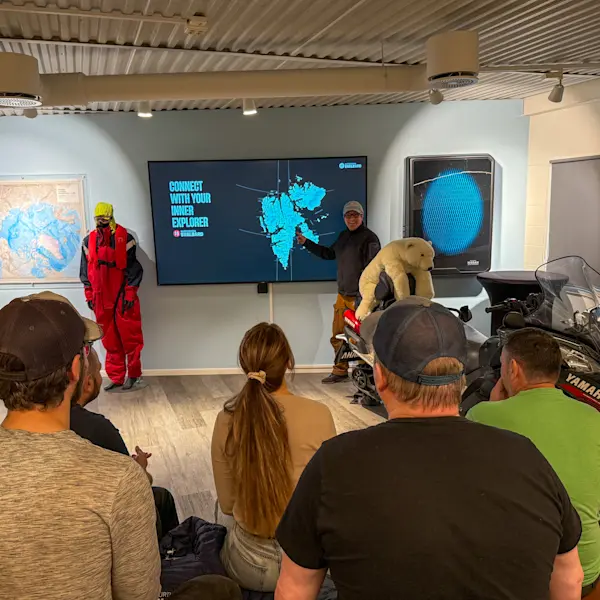
A day out in the field starts well before you meet your guide
“The first thing guides do in the morning is check the weather forecast. Then we look out the window,” says Tore.
Forecasts, wind, visibility, avalanche warnings and local conditions are carefully assessed every day. When the guides meet in the morning, they go through the planned route, who is joining the tour, and what adjustments may be needed. Experience levels, age, expectations and any special needs are all taken into account, and every tour goes through a documented risk assessment.
“No two tours are ever the same. Each one is shaped by both nature and the people taking part.”
How guides stay up to date: training, teamwork and local knowledge
Safety on Svalbard isn’t static. Conditions change, new experiences are developed and knowledge is constantly refined. That’s why guide training is not a one-off, it’s ongoing. Before every season, winter and summer, all guides take part in internal seminars and refresher training. This is where routines are updated and practised, and where skills are kept sharp across a wide range of scenarios.
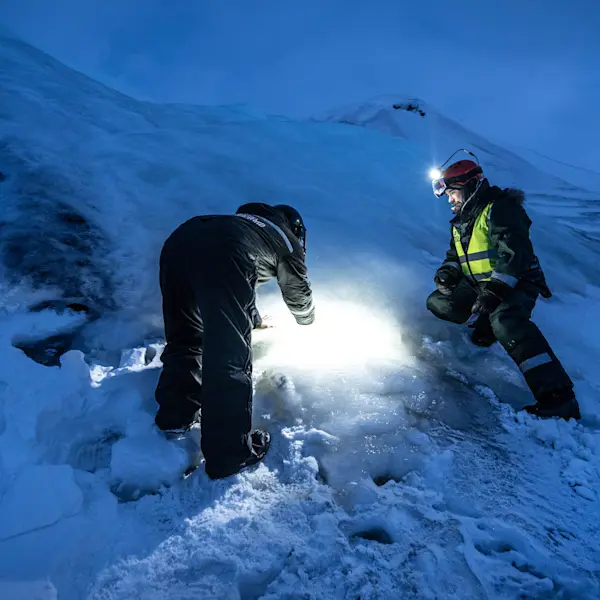
First aid is a core focus, alongside glacier travel, avalanche awareness, man-overboard procedures and the correct use of safety equipment. Guides also train in setting up emergency camps and tents, and in handling situations they may encounter in the field, from changing snow conditions to glacier-related incidents.
Training doesn’t happen in isolation either. There are regular joint exercises with other emergency services in Longyearbyen, ensuring good coordination and clear communication should an incident occur.
Beyond formal training, guides stay informed through local news, communication groups and close cooperation with organisations such as Visit Svalbard and AECO. This helps keep everyone aligned on current conditions, wildlife activity and best practice in the field.
Just as importantly, the guides live in Longyearbyen.
“There’s a strong guide community here. We meet, we talk, we share information – and we’re friends,” says Tore.
Living where they guide makes a difference. It creates a deeper understanding of the environment, the seasons and the realities of daily life in the High Arctic.
Understanding the weather on Svalbard
Weather on Svalbard is often described as unpredictable. In addition, it can feel that way because you move through different weather zones, especially near glaciers.
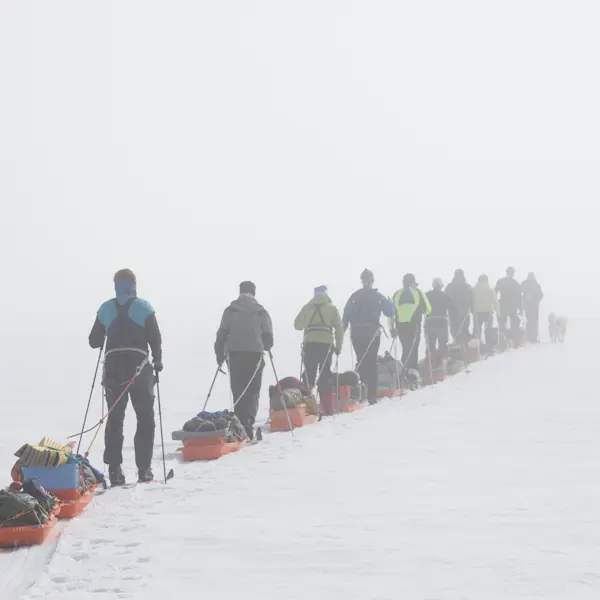
“It can seem like the weather changes quickly, but often it’s the landscape around you that’s changing,” Tore explains.
That said, wind is a constant factor to take seriously. In winter, it can mean poor visibility and rapid cooling. In summer, it affects conditions at sea, bringing waves, fog and more demanding travel.
This is why tours are sometimes adjusted, delayed or cancelled.
“If the conditions aren’t safe, we don’t go. It’s not dramatic, it’s just how it works here.”
Knowing what to expect
One of the most important points Tore wants guests to understand is how demanding some experiences can be.
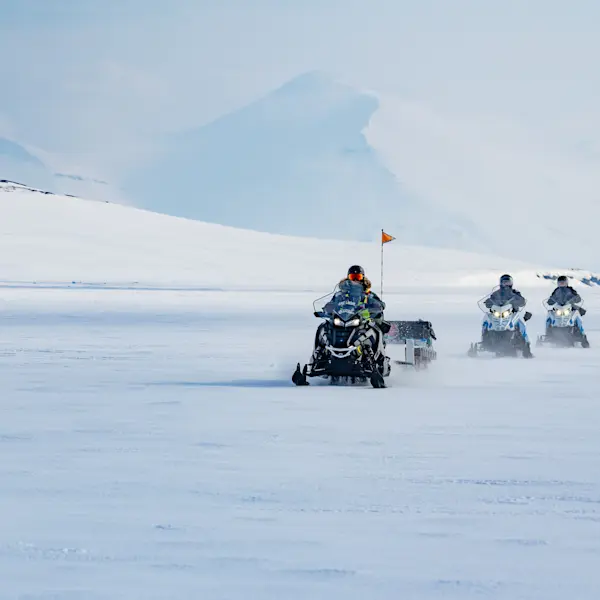
“When guests know what they’re signing up for, the experience is better for everyone.”
Distances on Svalbard are vast. A 200-kilometre snowmobile journey may sound manageable, but it feels very different in cold temperatures, wind and changing terrain. It’s worth asking yourself: how far would 200 kilometres take you back home?
Being prepared isn’t about being nervous, it’s about being comfortable with the fact that pace, route and duration may change along the way, because nature requires it.
Polar bears: respect rather than fear
The polar bear is a natural part of Svalbard, but not something you need to be afraid of.
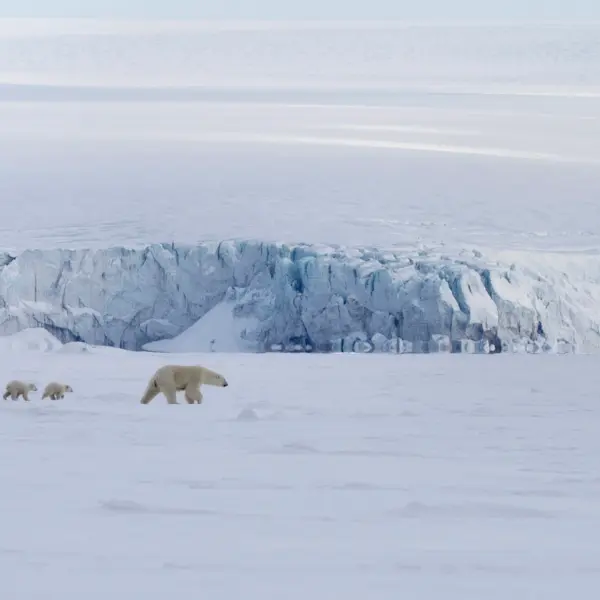
“It’s not likely to be attacked. But you do need to follow the rules,” says Tore.
On tour, that means staying together, following your guide’s instructions and never leaving the group. If a polar bear is encountered in the field, the situation is handled calmly and consistently by the guide, and the group moves away.
No photo stops. No debate. Distance and respect always come first.
Wildlife near town: observe, don’t approach
Svalbard reindeer and Arctic foxes are sometimes seen in Longyearbyen. Even if it’s tempting to get closer, the rules are clear: wildlife must not be approached or fed.
“This is about both animal welfare and safety. Foxes in particular can pose a risk if they behave unusually.”
Terrain, avalanches and decisions in the field
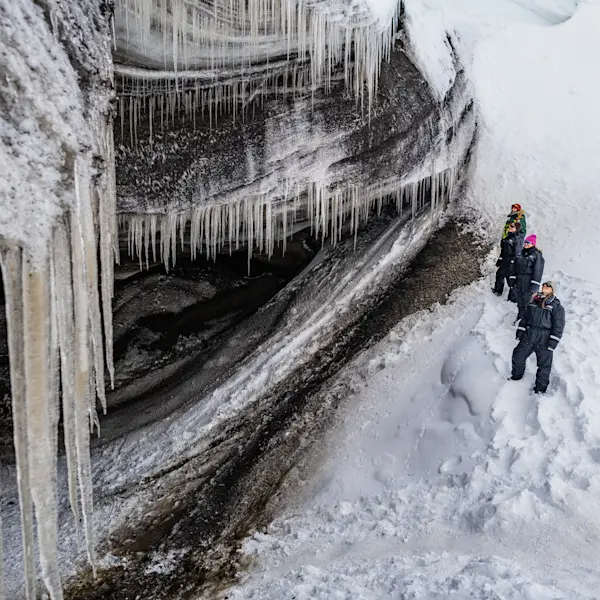
In Longyearbyen, extensive safety measures are in place, and within designated safety zones the risk is well managed. Outside the town, conditions are different. Here, guides always assess terrain, weather and warnings before departure. Routes and execution are adjusted to match the conditions of the day, and sometimes that means changing the plan. That’s not uncertainty. It’s experience.
If something does happen
All tours are carried out with dedicated communication equipment, as normal mobile coverage is limited outside Longyearbyen. Guides carry satellite phones, emergency beacons and systems for calling for assistance.
Svalbard has access to rescue helicopters, the Red Cross and the Coast Guard. Rescue operations in the field are free of charge for our guests, but it’s essential to have travel insurance that covers the activities you take part in, such as snowmobiling.
The hospital in Longyearbyen is small and efficient, but with limited capacity. Bring any necessary medication with you and don’t plan on treatment for minor issues.
Clothing: your most important safety contribution
On Svalbard, clothing is about far more than comfort. “Proper clothing is the most important piece of safety equipment guests bring with them,” says Tore. Wool base layers, good wool socks, clothing suited to the conditions, sturdy footwear in summer and proper face protection in winter all make a significant difference. One important sign to watch for in the cold is when pain disappears.
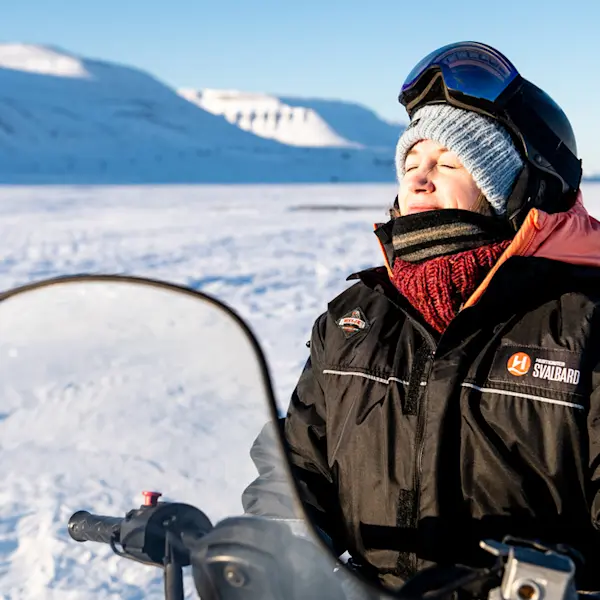
“If it stops hurting, you’ve become too cold. Speak up. Look out for each other. A guide can’t see everyone all the time.”
Prepare for the Arctic conditions of Svalbard with this essential packing guide.
When safety enhances the experience
When you go on tour with us, you are in safe hands, guided by people who know the landscape, the conditions and daily life in the High Arctic. The experience is at its best, however, when safety becomes a shared responsibility.
“When guests understand that nature is in charge, and that we constantly adapt to it, tours become both safer and more rewarding,” says Tore.
Experiencing Svalbard isn’t about challenging nature. It’s about listening to it, and letting it show itself on its own terms.
Useful tools before and during your trip
If you’d like to keep an eye on conditions yourself, either before you arrive or while you’re on Svalbard, there are a few trusted tools worth knowing about. They’re useful for building understanding, not for replacing the guide’s assessments in the field.
Varsom: official avalanche warnings and snow conditions
YR: detailed forecasts, real-time weather and webcams
Windy: visual wind, weather and sea conditions
Topo Svalbard: detailed maps and terrain information
Longyearbyen webcams: helpful for seeing current visibility and conditions
You can also check the live camera from Camp Barentz, which gives a good sense of conditions outside Longyearbyen.
These tools can help you better understand the environment you’re travelling in, but decisions in the field are always made by the guides, based on real-time conditions and experience.

Start planning your Svalbard adventure
Build a personalised, tailor made package of activities and accommodation, and you can save up to 30% on your stay.
Related articles