Activities and operations
Hurtigruten Svalbard has been operating experiences on Svalbard since 1989. Today, we continue to develop how we operate, including investing in electric technology, producing renewable electricity locally and working with organisations that establish guidelines for tourism in the Arctic.
Here are some of the measures currently in place.
Working with Visit Svalbard and AECO
We are members of Visit Svalbard and the Association of Arctic Expedition Cruise Operators (AECO).
Through these memberships, we take part in industry collaboration and follow applicable guidelines covering areas including wildlife encounters, visitor behaviour, shore landings and activities in Arctic environments.
AECO guidelines include measures designed to minimise disturbance to wildlife and reduce physical impacts at visited sites.
Producing renewable electricity locally
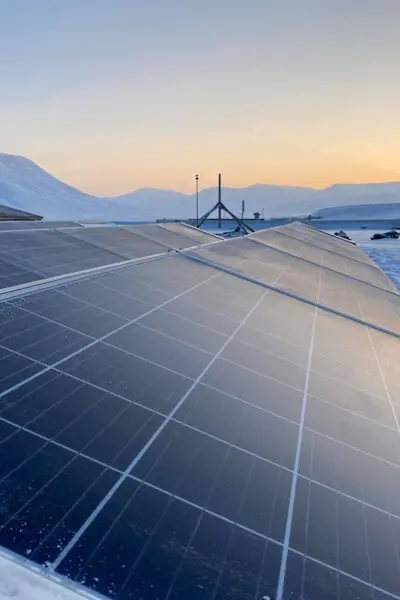
In 2023, we installed 650 solar panels on the roofs of Radisson Blu Polar Hotel and Polarsenteret in Longyearbyen.
In 2025, these installations generated 127,760 kWh of electricity. Together with our other solar installations and wind turbine, locally generated renewable electricity accounted for approximately 7% of our total electricity consumption.
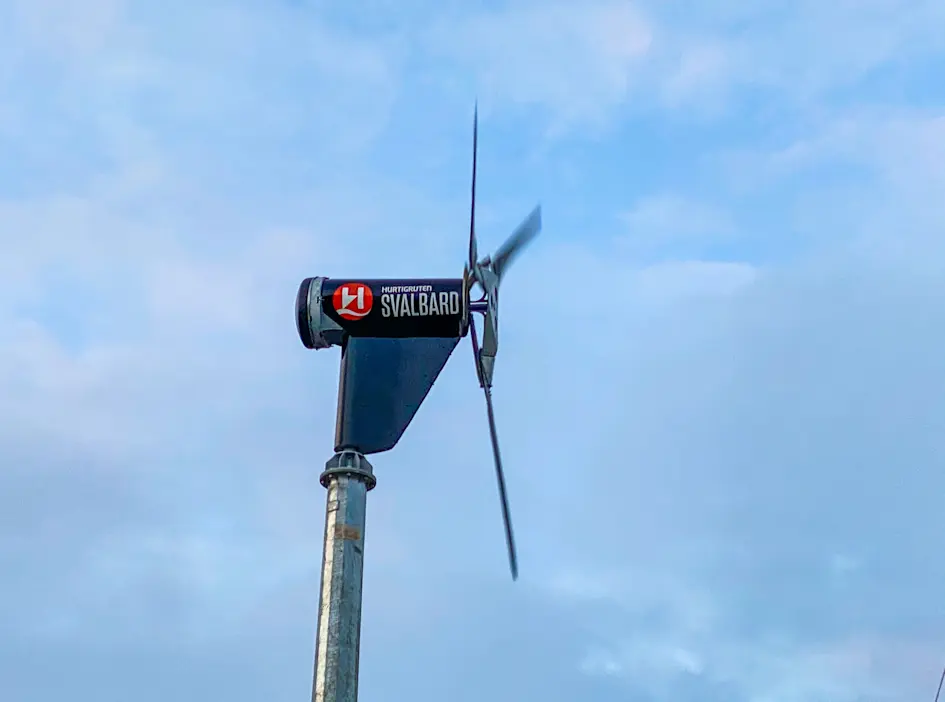
During the spring bird migration, the wind turbine is switched off to reduce the risk of disturbance to migrating birds.
At our expedition centre, electricity generated from solar and wind is stored in a battery system and can be used for the building and to charge electric snowmobiles, vehicles and bikes.
Here’s the coolest part:
Our solar panels and wind turbine team up to keep things running smoothly year-round. During the bright summer months, the solar panels soak up the midnight sun to power key operations. In the darker months of the polar night, the wind turbine at our expedition centre steps in, ensuring energy production even when the sun takes a break. All this power is stored in a large battery pack, keeping our expedition centre warm and our fleet of electric snowmobiles, cars, and bikes ready to roll.
Local guides & storytelling
Our guides are more than just experts—they’re storytellers, adventurers, and passionate ambassadors for this incredible Arctic destination. For many of us, Svalbard isn’t just a place; it’s a feeling. It’s something you can only truly understand once you’ve been here, and our guides are here to help you experience it.
Read more about our guides
Electric Snowmobiles
Our fleet includes eight next-generation electric snowmobiles.
Unlike conventional snowmobiles with combustion engines, electric snowmobiles have no tailpipe emissions during use and produce substantially less engine noise.
Our first-generation eSleds were introduced in November 2019, and we have continued to develop the electric fleet as the technology has evolved.


MS Bard: Hybrid-electric propulsion
MS Bard uses electric motors for propulsion, resulting in lower noise and vibration during electric operation than conventional combustion-engine propulsion.
For longer journeys, the vessel is equipped with diesel-powered range extenders. These engines generate electricity to recharge the batteries, allowing the vessel to continue using electric propulsion.
Electric Bikes
Electric bikes are used on selected summer and winter experiences in and around Longyearbyen.
The bikes are charged at our facilities where electricity generated by our solar panels and wind turbine is available, providing an alternative to motorised transport for selected activities. Available for both summer and winter tours, they let you glide through Longyearbyen’s stunning landscapes with ease and a smaller environmental footprint.


Electric Vehicles
We are gradually introducing electric vehicles into parts of our operations.
Our fleet includes a Mercedes e-Sprinter used for logistics in Longyearbyen and four Toyota ProAce Electric minibuses used for guest transport.
Where available, locally generated solar and wind electricity contributes to charging these vehicles.
Citizen Science with UNIS
We collaborate with the University Centre in Svalbard (UNIS) on selected citizen-science initiatives.
During some activities, guests may have the opportunity to contribute to data collection connected with ongoing research.
One winter project has involved research into pingos and methane emissions from meltwater. Selected activities allow participants to assist with sample collection, giving guests an opportunity to learn more about research taking place in Svalbard.
The projects available may vary by season and according to current research programmes.
Explore activities